


Automation and load balancing worldwide
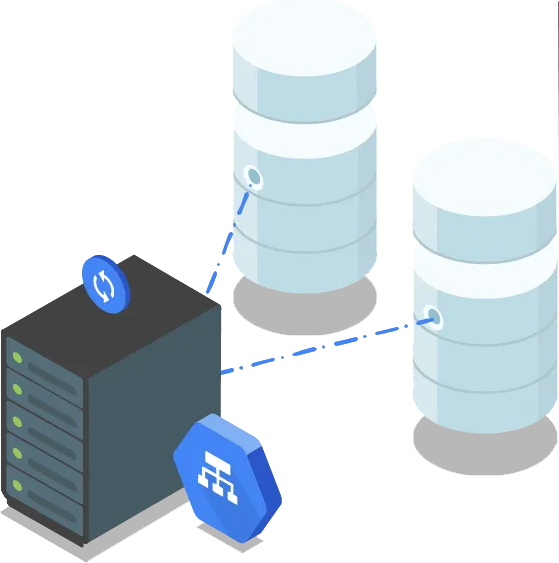
With Google Cloud Load Balancing, scale your applications on Compute Engine from zero to full throttle without the need for warm-up. Distribute your load-balanced computing resources across single or multiple regions—close to your users—and meet your high availability needs. Cloud Load Balancing can put your resources behind a dedicated IP and scale your resources up or down with intelligent auto-scaling. Google Cloud Load Balancer comes in a variety of flavors and is integrated with Cloud CDN for optimal usage and content delivery.

Global Load Balancing with a Single IP
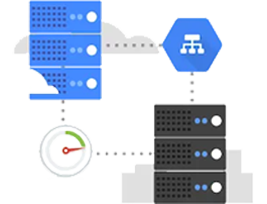
With Google Cloud Load Balancer, a single independent IP frontend fronts all of your backend instances in different regions around the world. This includes cross-regional load balancing, including automatic multi-region failover, which smoothly moves traffic across the fault if the backend becomes unhealthy. Unlike DNS-based global load balancing solutions, Google Cloud Load Balancer reacts instantly to changes in users, traffic, network, backend health, and other relevant conditions.
Software-Defined Load Balancing
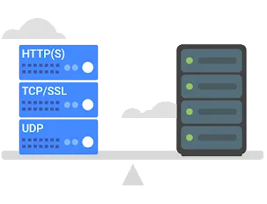
Google Cloud Load Balancer is a fully distributed, software-defined service for all your traffic. It is not an instance- or appliance-based solution, so you are not locked into physical load balancing infrastructure or face the HA, scale, and management challenges inherent to instance-based LBs. You can apply Google Cloud Load Balancer to all your traffic: HTTP(S), TCP/SSL, and UDP. You can also terminate your SSL traffic with HTTPS load balancing and SSL proxies.
Over a Million Requests Per Second
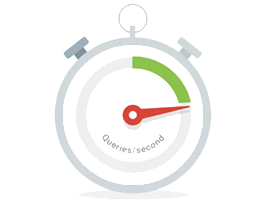
Google Cloud Load Balancer is built on the same cutting-edge infrastructure that powers Google. It supports 1 million+ requests per second with high performance and low latency. Traffic enters the Cloud Load Balancer through 80+ global load balancing locations, maximizing throughput across Google’s fast private network backbone.
Seamless Automation
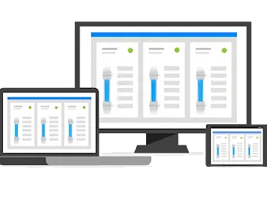
Google Cloud Load Balancer can scale as your users and traffic grow, including easily managing sudden, unexpected, and immediate spikes by redirecting traffic to other regions of the world that can handle the traffic. Auto-calibration requires no warm-up: you can go from zero to full throttle in seconds.

Internal Load Balancing
Internal load balancing allows you to create scalable, highly available internal services for internal customer instances without the need for load balancers to be exposed to the Internet. GCP internal load balancing is designed using Andromeda, a software-defined network virtualization platform. Internal load balancing also includes support for customers across VPNs.
Advanced Protocol Support
Google Cloud Load Balancer includes support for the latest application delivery protocols. It supports HTTP/2 with gRPC when connecting to the backend, and is also the first public cloud to offer QUIC support for our HTTPS load balancers, enabling faster session setup and a more responsive user experience.
Facilities
HTTP(S) Load Balancing
HTTP(S) Load Balancing can balance HTTP and HTTPS traffic across multiple backend instances, across multiple regions. Your entire application is accessible via a single global IP address, resulting in a simple DNS configuration. HTTP(S) Load Balancing is scalable, fault-tolerant, requires no warm-up, and enables content-based load balancing. For HTTPS traffic, it provides SSL termination and load balancing.
Cloud Logging
Cloud Logging for Load Balancing records all load balancing requests sent to your load balancer. These logs can be used for troubleshooting as well as analyzing user traffic. You can view the request logs and export them to Cloud Storage, BigQuery, or Pub/Sub for analysis.
TCP/SSL Load Balancing
TCP load balancing can spread TCP traffic across multiple instances in a compute engine zone. It is scalable, requires no warm-up, and health checks ensure that only healthy instances receive traffic. SSL Proxy provides SSL termination for your non-HTTPS traffic with load balancing.
Seamless Automation
Autoscaling helps your applications easily scale as traffic increases and reduces costs when resource requirements decrease. You simply define the autoscaling policy and the vendor performs autoscaling based on the measured load. No warm-up required – go from zero to full throttle in seconds.
SSL Upload
SSL Upload allows you to centrally manage SSL certificates and decryption. To ensure the highest level of security, you can enable encryption between your load balancer layer and your backend, with some additional overhead for processing on the backend.
High-fidelity health checks
Health checks ensure that new connections are only balanced against healthy backends that are ready and willing to receive them. High-fidelity health checks ensure that probes mimic real backend traffic.
Advanced Feature Support
Google Cloud Load Balancer also includes advanced support features such as IPv6 global load balancing, WebSockets, user-defined request headers, and private private peer-to-peer protocol forwarding.
Desire
Google Mail’s cloud load balancer provides the ability to route and stick user traffic to specific backend instances.
Cloud CDN Integration
Enable Cloud CDN for HTTP(S) load balancing to optimize app delivery for your users with a checkbox.
UDP Load Balancing
UDP load balancing can balance UDP traffic across multiple instances in the engine zone. It is scalable, does not require pre-warming, and health checks ensure that only healthy instances receive traffic.
”Google's Cloud Load Balancer Platform simplifies our deployment and provides seamless scale and high availability. We can easily handle 150,000 requests per second with no warm-up time and no provisioning required. Having this peace of mind has made a significant difference compared to configuring specialized load balancing hardware in our day.
Arnaud Granal, CTO, Adcash

 ITPIRAN