









Introduction
As a React developer, are you tired of struggling with poorly managed server requests? Look no further; React Hooks are a powerful feature of the React library that allows developers to use state and other React features in functional components, and can help optimize your server requests and take your web application performance to the next level.
You might be thinking, “What’s the big deal about server requests? Why do they matter?» Well, let me tell you – server requests play a huge role in determining the user experience. Poorly managed server requests can lead to slow loading times, poor performance, and a frustrating user experience. React Hooks provides a way to efficiently and organizedly manage server requests, resulting in faster loading, improved performance, and a better user experience.
This tutorial will guide you through using React Hooks to improve server request performance, manage server requests more effectively, and help you create more optimized web applications.
By the end of this tutorial, you will have a thorough understanding of how to use React Hooks to optimize server requests and can implement these techniques in your projects to improve the performance and user experience of your web applications.
Prerequisites
- Understanding JavaScript
- Introduction to React Hooks
- Learn how to make server requests in JavaScript.
- A development work environment
- A code editor
Additionally, having experience working with APIs and understanding RESTful principles would be beneficial.
If you’re new to server request optimization, don’t worry – this tutorial is designed for developers of all experience levels. If you’re not yet familiar with the concepts, you may need to do some more research and experimentation on your own. But don’t worry; with a little patience and practice, you can master the art of server request optimization in no time! So, let’s get started and increase the performance of your React app.
Setting up a new React project
Setting up a new React project can be a daunting task for novice developers, but with the help of the Create React App (CRA) tool, it's never been easier. CRA is a popular command-line interface tool that automates the process of setting up a new React project and provides an optimized development environment for building React applications.
To create a React project, you need to install Node.js and npm on your computer. If you don't already have them, you can download them from the official Node.js website. Once you have these tools installed, open your terminal or command prompt to the directory where you want the application to be created, use the following command to create a new React project:
npx create-react-app digital-ocean-tutorial
If the application is created successfully, the following output will be displayed:
...
Success! Created digital-ocean-tutorial at your_file_path/digital-ocean-tutorial
Inside that directory, you can run several commands:
npm start
Starts the development server.
npm run build
Bundles the app into static files for production.
npm test
Starts the test runner.
npm run eject
Removes this tool and copies build dependencies, configuration files and scripts into the app directory. If you do this, you can’t go back!
We suggest that you begin by typing:
cd digital-ocean-tutorial
npm start
This will create a new directory with the same name as your project, containing all the necessary files for your new React project.
Once the setup process is complete, navigate to the new React project directory by running the following command:
cd digital-ocean-tutorial
And then run the following command to start the development server:
npm start
If everything went well, the server should start and the following output will be displayed:
Compiled successfully!
You can now view digital-ocean-tutorial in the browser
http://localhost:3000
Note that the development build is not optimized.
To create a production build, use npm run build.
This will launch your new React project in your default web browser. You should now be able to see the “Welcome to React” message, which means your project is set up properly and ready for you to start building your next great app!
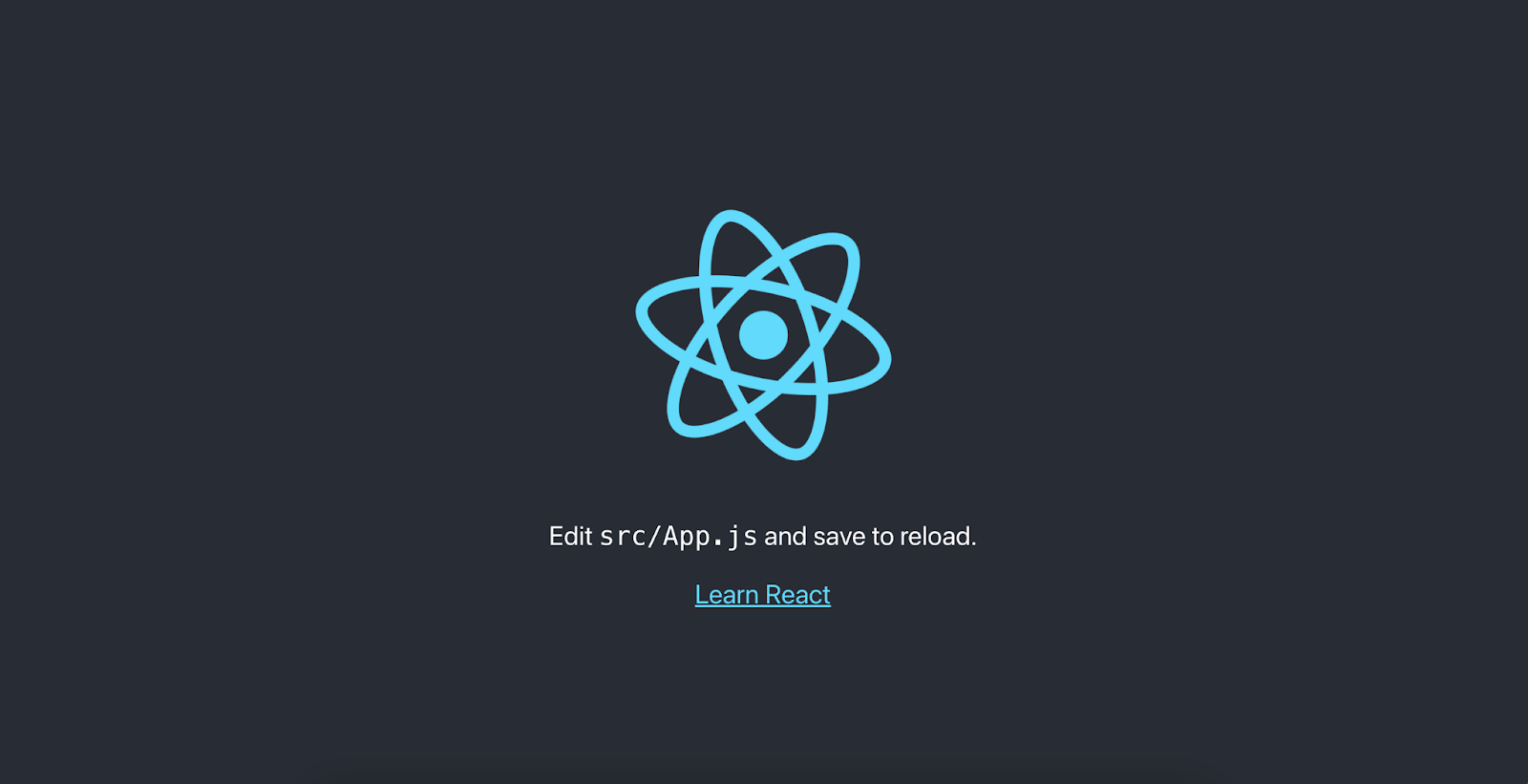
With CRA, you can focus on writing code without worrying about setting up and configuring your development environment.
Now that you have your React project set up, let's look at the different ways we can optimize server requests using React hooks.
Synchronize components with the UseEffect hook
The useEffect hook in React allows developers to synchronize a component with an external system, such as a server, by handling side effects such as data fetching, in a way that is both efficient and understandable. One of the most common use cases for the useEffect hook is to make server requests and update the state of the component.
One way to use the useEffect hook for server requests is to call a function that performs the request inside the useEffect hook. This function should use the Fetch API or a library like Axios to perform the request, and then update the component's state with the response data using the setState hook.
Let's look at an example of how to use the useEffect hook to fetch data from a JSON surrogate API and update the state of the component. Go to the app.js file, inside your project's src folder, remove the default code and replace it with the following code snippet:
import React, { useEffect, useState } from 'react';
function MyComponent() {
const [data, setData] = useState([]);
useEffect(() => {
async function fetchData() {
const response = await fetch('https://jsonplaceholder.typicode.com/posts');
const data = await response.json();
setData(data);
}
fetchData();
}, []);
return (
<div>
{data.map((item) => (
<div key={item.id}>
<h2>- {item.title}</h2>
<p>{item.body}</p>
</div>
))}
</div>
);
}
export default MyComponent
In the example above, the useEffect hook is called with an empty dependency array, meaning it only executes on the initial render of the component. The component state is initialized with an empty array, and the fetchData function is called inside the useEffect hook to make a request to the server and update the state with the response data.
If you refresh the browser or application, you should be able to see the result of the request made in the code sample above as shown in the image below:

It's important to note that unnecessary re-renders can cause performance issues, so it's best to minimize the number of renders caused by the useEffect hook. One way to do this is to only include the props and state variables used by the hook in the dependency array.
Proper error handling when requesting the server is also important to prevent the component from breaking. Error handling can be done by adding a try-catch block in the fetchData function and using the setError hook to update the component state with an error message. This way, the application can display an error message to the user if a problem occurs.
By following best practices, you can confidently handle server requests in a React component and create a better user experience.
Optimize server request performance using the useMemo hook
The useMemo hook in React is a performance optimization tool that allows developers to remember data by storing the results of calculations so that it can be reused without having to repeat the process. This can be especially useful when working with server requests, as it can help prevent unnecessary re-rendering and improve component performance.
One way to use the useMemo hook in the context of a server request is to remember the data returned from the server and use it to update the state of the component. This can be done by calling the useMemo hook inside the useEffect hook, passing the server data as the first argument and a dependency array as the second argument. The dependency array should contain any props or state variables that are used to compute the stored data.
To try this method using the useMemo hook to memorize data from the JSON surrogate API and update the component's state, replace the code in app.js with the following code snippet:
import { useEffect, useState, useMemo } from 'react';
function MyComponent({ postId }) {
const [data, setData] = useState({});
useEffect(() => {
async function fetchData() {
const response = await fetch(`https://jsonplaceholder.typicode.com/posts/${postId}`);
const data = await response.json();
setData(data);
}
fetchData();
}, [postId]);
const title = useMemo(() => data.title, [data]);
return (
<div>
<h2>{title}</h2>
</div>
);
}
export default MyComponent
In the above example, the useEffect hook is called with postId as the dependency array, meaning it will be executed whenever the postId prop changes. The component state is initialized with an empty object, then the fetchData function is called inside the useEffect hook to make a request to the server and update the state with the response data. Inside the component, we use the useMemo hook to maintain the title by passing data.title as the first argument and [data] as the second argument so that the title is updated whenever the data changes.
Below is the result of the request in the code sample above:

Note that useMemo is not always necessary and should only be used when the component depends on some properties or states that may change frequently and are computationally expensive. Improper use of useMemo can lead to memory leaks and other performance issues.
Managing server request state with useReducer Hook
The useReducer hook in React is similar to the useState hook but allows for more complex and predictable state management. Instead of directly updating the state, useReducer allows you to dispatch actions that describe the state update and a reducer function that updates the state based on the dispatch action.
One of the benefits of using the useReducer hook to handle server requests is better separation of concerns. Instead of having the logic for handling server requests scattered throughout the component, it can be encapsulated in the reducer function, making the component code easier to understand and maintain.
To try this approach using the useReducer hook to remember data from a JSON variable API and update the component's state, replace the code in app.js with the following code snippet:
import { useReducer } from 'react';
const initialState = { data: [], loading: false, error: '' };
const reducer = (state, action) => {
switch (action.type) {
case 'FETCH_DATA_REQUEST':
return { ...state, loading: true };
case 'FETCH_DATA_SUCCESS':
return { ...state, data: action.payload, loading: false };
case 'FETCH_DATA_FAILURE':
return { ...state, error: action.payload, loading: false };
default:
return state;
}
};
function MyComponent() {
const [state, dispatch] = useReducer(reducer, initialState);
const fetchData = async () => {
dispatch({ type: 'FETCH_DATA_REQUEST' });
try {
const response = await fetch('https://jsonplaceholder.typicode.com/posts');
const data = await response.json();
dispatch({ type: 'FETCH_DATA_SUCCESS', payload: data });
} catch (error) {
dispatch({ type: 'FETCH_DATA_FAILURE', payload: error.message });
}
};
return (
<div>
{state.loading ? (
<p>Loading...</p>
) : state.error ? (
<p>{state.error}</p>
) :
<div>
{state.data.map((item) => (
<div key={item.id}>
<h2>{item.title}</h2>
<p>{item.body}</p>
</div>
))}
</div>
)}
<button onClick={fetchData}>Fetch Data</button>
</div>
);
}
export default MyComponent
In the provided code snippet, the useReducer hook is called with the reducer function and the initial state is passed as an argument. The component state is initialized with an empty array as data, a loading variable set to false, and an empty error message variable. When the “Fetch Data” button is clicked, the fetchData function is executed, which sends actions in response to the request status, which can be success or failure.
Below is the result of the request made in the code sample above:

Additionally, the useReducer hook allows for more efficient management of complex states. Using actions and reducers to update state makes it easier to control the impact of different actions on different parts of the state, making it easier to add new features and troubleshoot problems in the application.
Result
In short, this tutorial has covered the basics of optimizing server requests with React Hooks. React Hooks are a powerful feature of the React library that allows developers to use state and other React features in functional components. Using the useEffect, useMemo, and useReducer hooks, you can easily manage and optimize server requests, resulting in faster load times, improved performance, and a better user experience for your users. By following the techniques demonstrated in this tutorial, you can improve the performance and user experience of your web applications.
Now it's your turn to try these techniques in your own projects. As a next step, you can explore more advanced topics like pagination and caching. Remember that React Hooks is an ever-evolving technology, so stay up to date with the latest updates and best practices to continue optimizing your server requests.